Planning Today’s Transmission Infrastructure for Tomorrow’s Power
By Steve Epperson, CEO, Sunflower Electric Power Corporation
When something works as expected, we often take it for granted. Most of us don't think about the roads, water systems, or electrical infrastructure powering our homes, farms, schools, hospitals, and businesses. Like all critical infrastructure, these systems require ongoing maintenance and strategic investment to continue serving our communities safely and reliably.
In the first article of this series, we introduced the partnership between Sunflower Electric Power Corporation and our seven member utilities. We also explained how the cooperative business model keeps decisions local and focused on serving our members. In Part 2, we take a closer look at the transmission system, an essential part of delivering reliable electricity, and how we manage those costs responsibly.
The Foundation of Reliable Power
The high-voltage transmission network plays a critical role in the electric grid. Transmission lines move electricity from power plants to local substations, where local electric cooperatives deliver it to homes and businesses.
Sunflower maintains nearly 2,347 miles of transmission line across central and western Kansas, along with the substations and equipment needed to provide reliable electric service. Just as homeowners replace a roof or upgrade plumbing before problems occur, utilities evaluate every asset to determine whether maintenance, upgrades, or replacement will provide the greatest long-term value. Planning ahead helps minimize outages, reduce costly repairs, and maintain reliability.
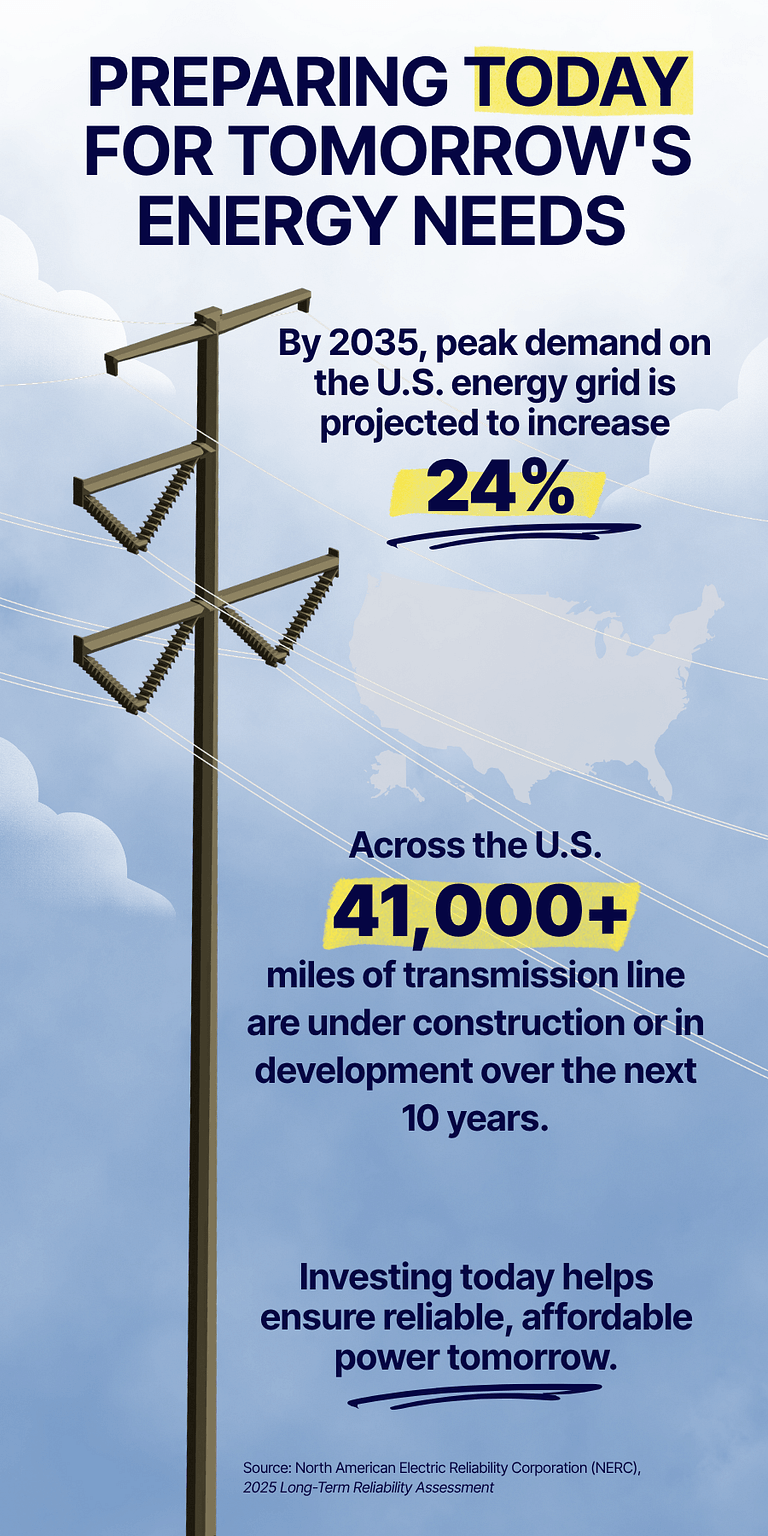
At the same time, the current infrastructure is aging nationwide. The North American Electric Reliability Corporation (NERC) says “electricity demand is increasing at a pace not seen in decades” as communities grow, and new businesses and industries expand. To meet tomorrow's energy needs, utilities must maintain today's system while strategically expanding the grid for the future.
How Costs and Rates Differ
We know rising costs are top of mind for families and businesses, and we are feeling those pressures, too. Like many industries, electric utilities continue to experience higher costs for materials, construction, labor, and financing.
It's important to understand, however, that costs and electric rates are not the same thing.
While operating costs may increase, Sunflower uses several strategies to help stabilize electric rates. These include operating power plants efficiently, planning and investing carefully in transmission infrastructure, participating in Southwest Power Pool’s energy market, managing finances responsibly, and growing the system thoughtfully.
Managing Resources Responsibly
As not-for-profit cooperatives, Sunflower and our member utilities provide reliable electric service while making responsible decisions on behalf of members like you. That means focusing on the costs we can control.
Instead of waiting for equipment to fail, Sunflower uses inspection data and planning tools to focus maintenance where it will make the biggest difference. This helps balance risk and reliability and make informed decisions about maintaining and modernizing our system.
Sunflower crews also use advanced technologies, including aerial and infrared inspections, to detect changing line clearances, vegetation concerns, structural wear, and overheating equipment that routine inspections may miss. When small issues are addressed early, we help prevent larger repairs and support reliability.
Likewise, transmission structures receive regular inspections above and below ground. When inspectors identify minor deterioration, treatments such as preservative pole wraps can often extend the life of a wood pole and delay replacement while maintaining safety and reliability. In many cases, aerial inspections also allow Sunflower to replace an individual crossarm rather than an entire transmission structure, which reduces costs and extends asset life.
Sometimes, managing members’ dollars responsibly means investing a little more today to save significantly more tomorrow. For example, Sunflower strategically installs ductile iron poles in locations near highway, railroad, creek, and distribution line crossings. Although they cost 5-8% more upfront than wooden poles, they have a 100+ year service life and better withstand severe weather and vehicle impacts. Their longer service life reduces replacement needs and lowers long-term ownership costs.
These examples reflect an important principle: The lowest upfront cost does not always create the best long-term value if it leads to more repairs, a shorter service life, or higher long-term expenses. Using members’ dollars wisely is more than a promise; it is our responsibility.
Looking Ahead
As electricity demand grows, transmission infrastructure is just one piece of a much larger story. In future articles, we will explore the factors influencing the wholesale cost of electricity, including power generation, regional energy market dynamics, supply chain challenges, and the steps cooperatives take to help provide long-term rate stability.
Through every challenge and opportunity, one thing remains unchanged: the partnership between Sunflower and our members. Together, we remain committed to planning carefully, investing wisely, and managing every dollar responsibly so we can provide reliable electric service for our communities.
Read the Series
Behind the Cost of Power | Part 1: Understanding the Cooperative Difference